Your Image of the Child
Where teaching begins.
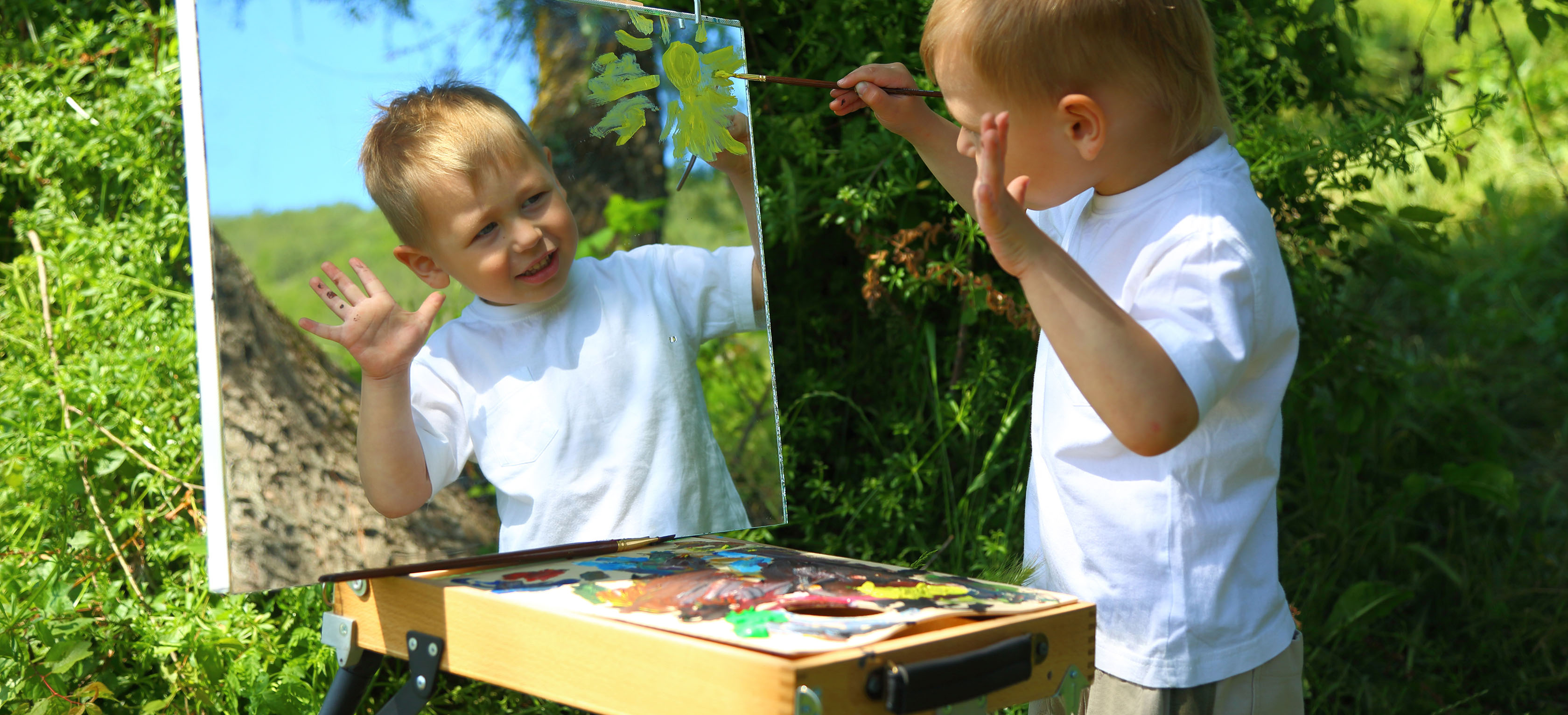
The image of the child held by each adult directs how they speak, listen, observe, and relate. It also shapes the environment adults construct around children.
- Posing important questions.Adults and children continually ask questions of one another. Families are part of this ongoing conversation about what children are doing, feeling, and expecting.
- Considering each child’s reality.No child is abstract or isolated. Each arrives with relationships, experiences, feelings, and a particular reality that enters the school with them.
- Growing comfortable with the unknown.Schools cannot be entirely predictable. Educators remain open to what may grow from children’s ideas and are willing to change their plans.
- Enjoying relationships.Children and adults need to enjoy school, one another, and the work they do together. Adults must take care not to make children passive in their own learning.
- Finding our way in the forest.Education is a shared, living path for children, teachers, and families—one concerned with children’s health and happiness as well as learning.
- Learning to wait.Careful observation helps adults understand a child’s resources and potential. Children need opportunities to learn for themselves, with adult intervention used thoughtfully.
- Becoming totally involved.Children need adults who are visibly present, attentive, helpful, and interested in the process of their work—not only its finished result.
- Discovering a new way of observing.Teachers learn with and from children, recognizing the rich learning that happens between children and resisting rapid assessment or judgment.
- Redefining roles.The adult is a creator of relationships among people, ideas, materials, and environments; the teacher is also a researcher, planner, participant, and listener.
- Forging alliances with families.Strong partnerships with families help children, educators, and parents understand the important work taking place at school.
- Building strong images.Children have rights, strengths, intelligence, imagination, and ambitious desires. They deserve recognition rather than an image of fragility or incompleteness.
This page closely paraphrases the translated and adapted seminar by Loris Malaguzzi, originally presented in Reggio Emilia in June 1993. The source credits translators Baji Rankin, Leslie Morrow, and Lella Gandini.
Read the original “Your Image of the Child: Where Teaching Begins” (PDF)